
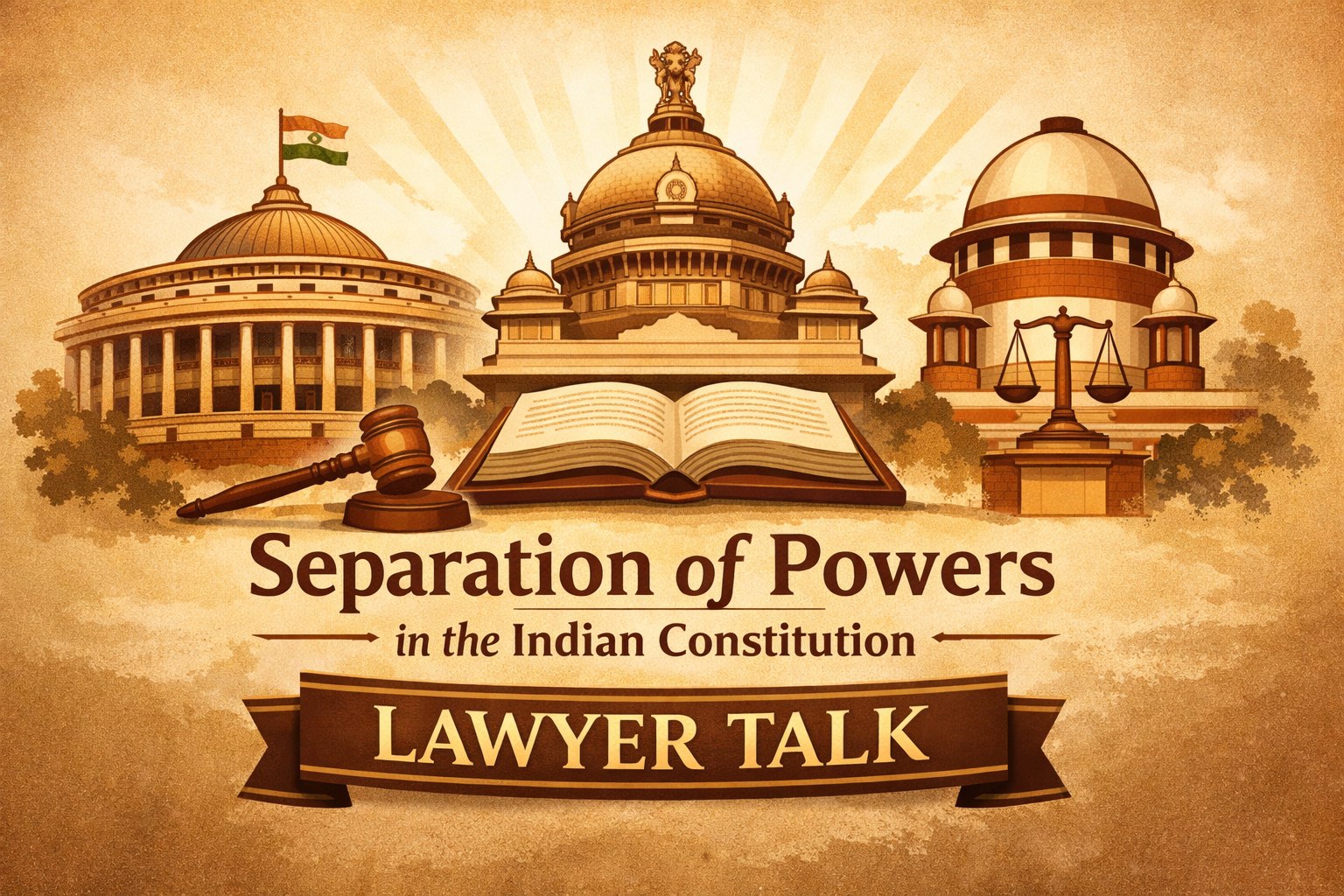
The idea of Separation of Powers is one of the most important principles in a democratic system. It ensures that power is not concentrated in the hands of a single authority. In India, this principle plays a crucial role in maintaining balance, accountability, and proper functioning of the government.
Although the Indian Constitution does not strictly use the phrase “separation of powers,” the structure of governance clearly reflects this concept through the distribution of responsibilities among different organs of the State.
What is Separation of Powers?
Separation of powers means that the government is divided into three main organs, and each organ performs different functions. This division helps prevent misuse of authority and promotes checks and balances within the system.

The three organs of the government are:
1. Legislature
The Legislature is responsible for making laws for the country. At the central level, it includes Parliament, which consists of the Lok Sabha and the Rajya Sabha.
2. Executive
The Executive is responsible for implementing and enforcing the laws made by the Legislature. It includes the President, Prime Minister, Council of Ministers, and administrative authorities.
3. Judiciary
The Judiciary interprets the laws and ensures that they are applied fairly. Courts also protect the Constitution and the fundamental rights of citizens.
Separation of Powers in the Indian Context
Unlike some countries where powers are strictly separated, India follows a flexible approach. The Constitution provides a functional separation but allows certain overlaps between the organs to ensure efficient governance.
For example:
- The Executive is part of the Legislature because ministers are members of Parliament.
- The Judiciary has the power of judicial review, through which it can examine laws made by the Legislature.
- The President has legislative powers such as issuing ordinances when Parliament is not in session.
This system allows cooperation between the organs while still maintaining a balance of power.
Importance of Separation of Powers
The principle is essential for several reasons:
- Prevents concentration of power in a single authority.
- Ensures accountability among different organs of government.
- Protects democracy and rule of law.
- Safeguards fundamental rights of citizens through judicial oversight.
Because of these functions, separation of powers strengthens the democratic framework of India.
Conclusion
The doctrine of separation of powers is an important feature of the Indian constitutional system. Even though the Constitution does not follow a strict separation, it ensures that the Legislature, Executive, and Judiciary work independently while maintaining checks and balances. This balance is essential for maintaining transparency, protecting citizens’ rights, and ensuring the smooth functioning of democracy.
– Team Lawyer Talks