
In today’s world, reputation is extremely valuable. A single false statement can damage a person’s image, career, or social standing. The law of defamation exists to protect individuals from such harm.
In India, defamation can lead to two different kinds of legal consequences — civil liability and criminal liability. While both deal with harm to reputation, the purpose and remedies are different. Understanding this difference is important for law students and judiciary aspirants.
What is Defamation?
Defamation occurs when someone makes or publishes a false statement about another person that harms their reputation in the eyes of society.
The statement may be spoken, written, printed, or even communicated through gestures or images.
Defamation is generally divided into two types:
- Libel – Defamation in written or permanent form (such as newspapers, books, social media posts).
- Slander – Defamation in spoken form.
Criminal Defamation
Criminal defamation is defined under Sections 499 and 500 of the Indian Penal Code (IPC). The purpose here is to punish the person who intentionally harms another’s reputation.
Essential Elements:
- A statement or imputation about a person
- Publication of that statement
- Intention or knowledge that it will harm the person’s reputation
Punishment:
If the offence is proved, the accused may face imprisonment up to two years, fine, or both.
Criminal defamation treats the act as an offence against society, not just against the individual.
Civil Defamation
Civil defamation falls under the law of torts. Here, the focus is not punishment but compensation for the harm caused to a person’s reputation.
If someone proves that their reputation has been damaged due to a defamatory statement, the court may order the defendant to pay monetary damages.
Key Features:
- The main remedy is financial compensation.
- The victim files a civil suit for damages.
- The purpose is to restore the injured person’s reputation and compensate for losses.
Key Differences Between Criminal and Civil Defamation
1. Purpose
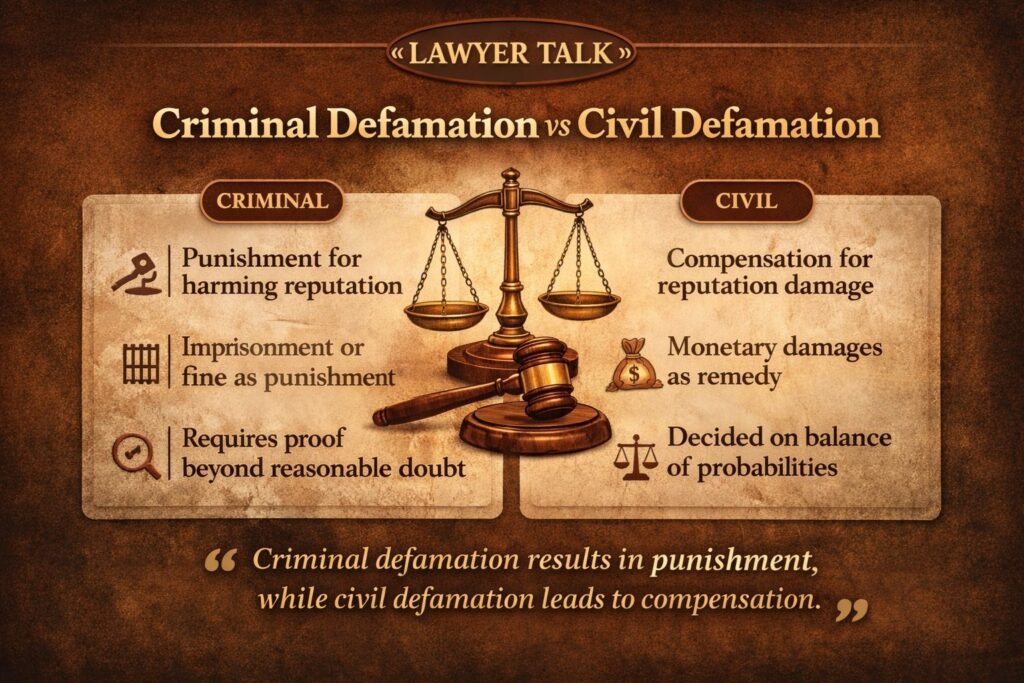
Criminal defamation aims to punish the offender, while civil defamation focuses on compensating the victim.
2. Nature of Proceedings
Criminal defamation is prosecuted as a criminal case, whereas civil defamation is filed as a civil suit for damages.
3. Outcome
In criminal cases, the accused may face imprisonment or fine. In civil cases, the defendant may be required to pay compensation.
4. Burden of Proof
Criminal cases require proof beyond reasonable doubt, while civil cases are decided on the balance of probabilities.
Conclusion
Defamation law plays a crucial role in protecting a person’s dignity and reputation. While criminal defamation punishes the wrongdoer, civil defamation provides compensation to the victim.
Understanding the difference between these two forms of liability helps law students and aspirants grasp how the legal system balances freedom of speech with the protection of reputation.
– Team Lawyer Talks