
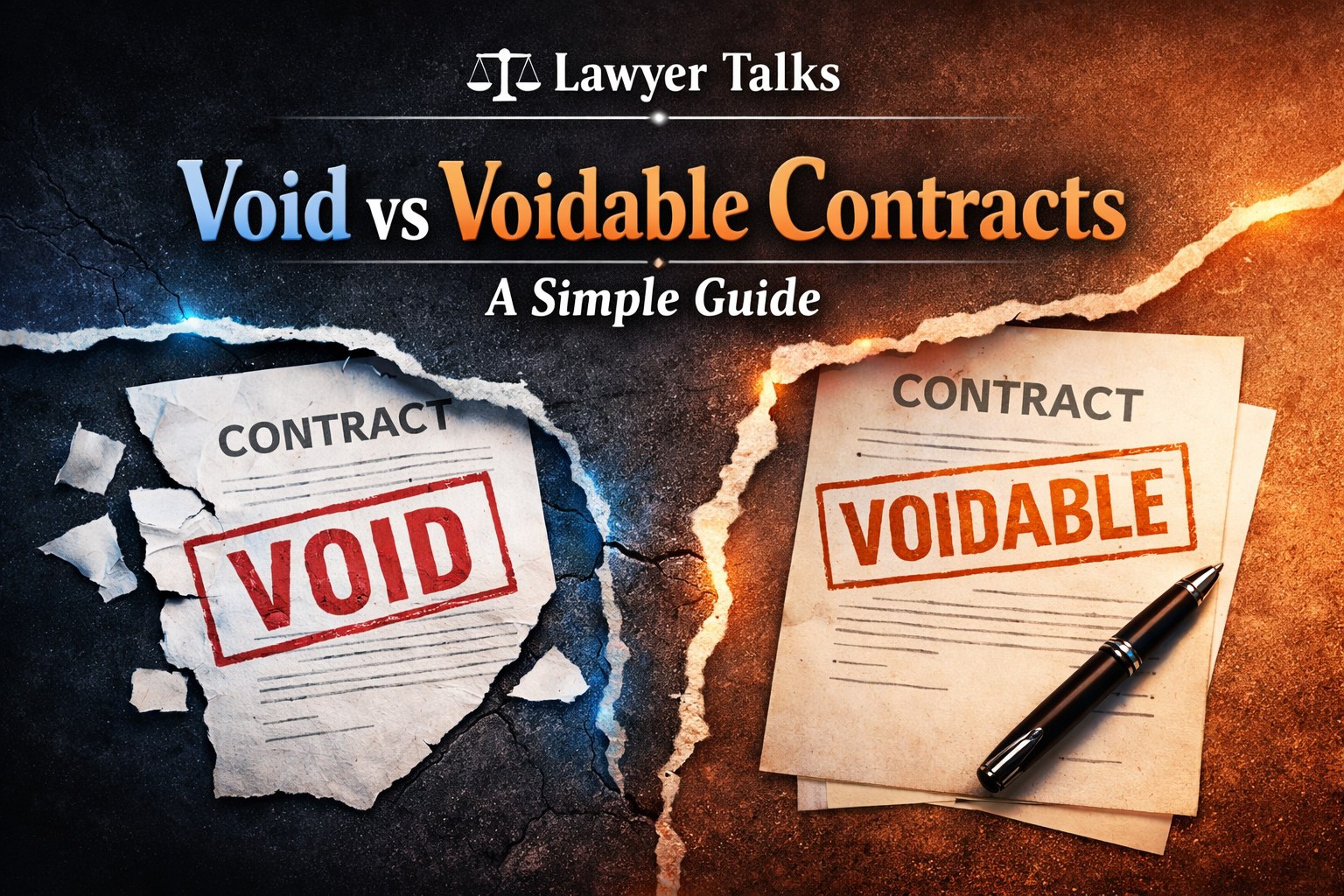
In contract law, not every agreement leads to a valid and enforceable relationship. Two important concepts you must clearly understand are void contracts and voidable contracts. While they may sound similar, their legal impact is very different.
Let’s understand them in a simple and practical way.
What is a Void Contract?
A void contract is an agreement that is not enforceable by law from the very beginning. It has no legal existence in the eyes of law. In simple terms, it is treated as if it never existed.
A contract becomes void when it involves something illegal, impossible, or against public policy. Since the law does not recognize such agreements, no party can go to court to enforce it.
For example, if two people enter into an agreement for an unlawful activity, the contract is automatically void.
What is a Voidable Contract?
A voidable contract is a contract that is valid in the beginning but can be cancelled by one of the parties. It remains enforceable unless the affected party chooses to reject it.
This usually happens when the consent of one party is not free. Factors like fraud, coercion, undue influence, or misrepresentation can make a contract voidable.
For example, if someone is forced or misled into signing a contract, they have the option to either continue with it or cancel it.
Key Difference in Simple Terms
The main difference lies in their legal status. A void contract is never valid, while a voidable contract starts as valid but can later be rejected.
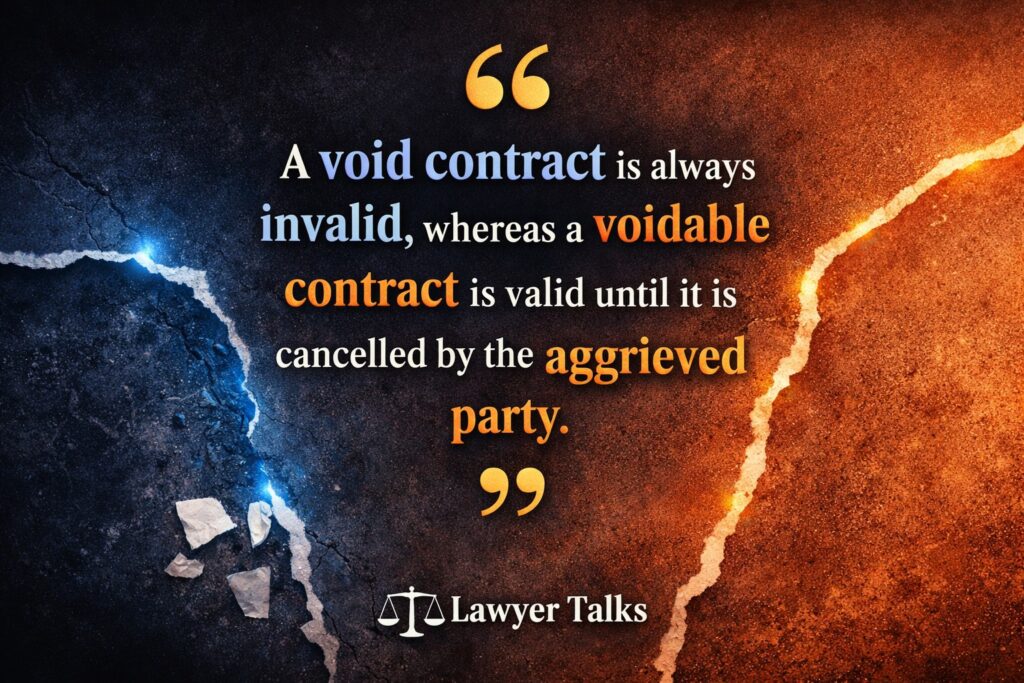
In a void contract, no rights or obligations arise at all. On the other hand, in a voidable contract, rights and obligations exist until the contract is cancelled.
Another important point is that in a voidable contract, only the aggrieved party has the power to decide whether to continue or cancel the agreement.
Why This Concept is Important
Understanding the difference between void and voidable contracts is essential because it directly affects legal rights and remedies. It helps you determine whether a contract can be enforced in court or not.
For law students, this is a foundational concept that appears frequently in exams as well as in practical legal situations.
Conclusion
To sum it up in a simple way:
A void contract has no legal value from the start, while a voidable contract has legal value unless it is cancelled.
Knowing this distinction will strengthen your understanding of contract law and help you analyze legal problems more effectively.
– Team Lawyer Talks