
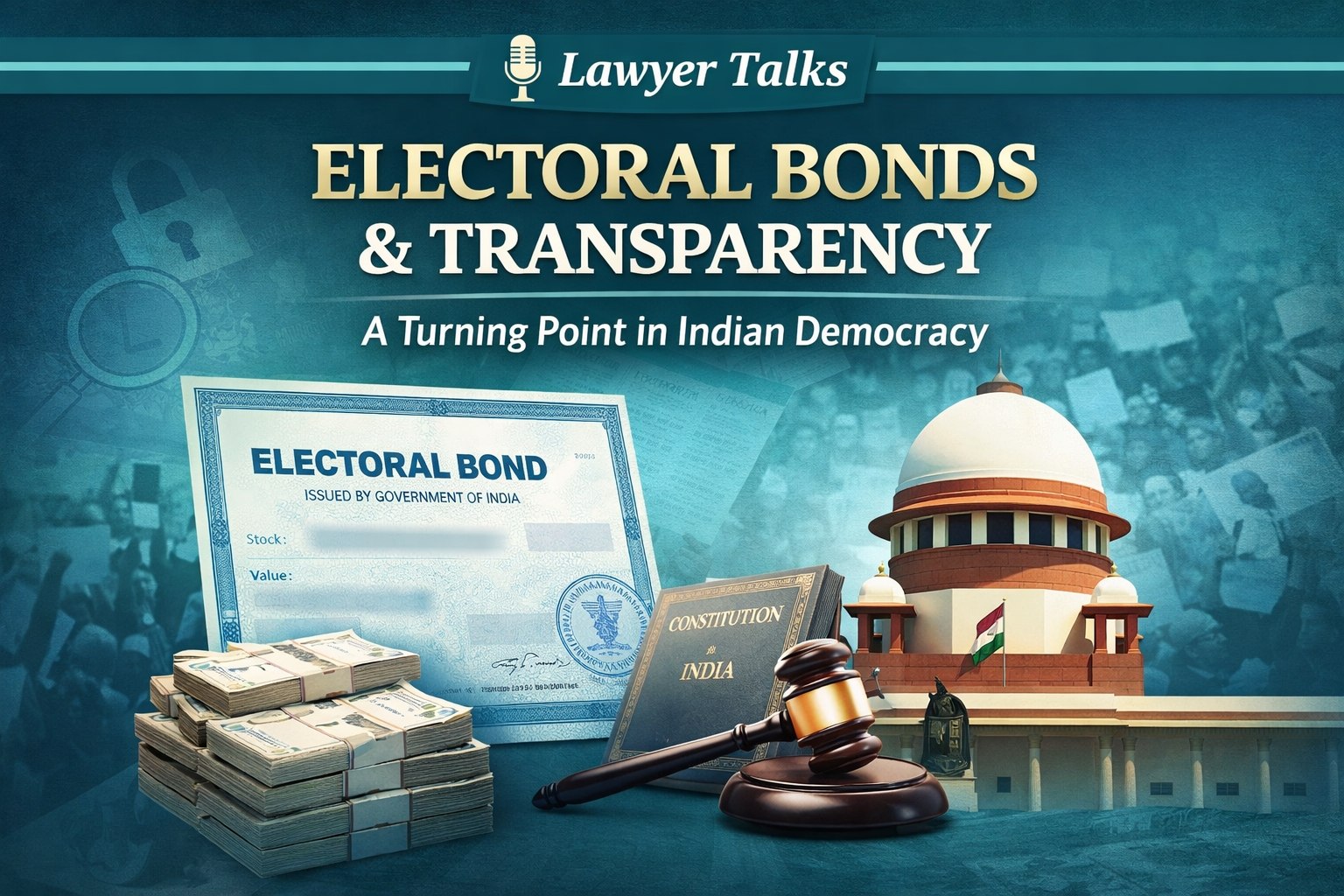
In a historic change, the controversy of the Electoral Bonds Scheme has transformed the discussion on transparency, accountability, and integrity of the Indian electoral process. It is not only a question of political financing, but it is also a question of democratic fairness itself. Let’s understand this in more simple and practical way.
What is the Scheme of Electoral Bonds?
Electoral Bond Scheme is a scheme that was launched in 2018 to allow individuals and businesses to make donations to political parties.
Under this scheme:
– Electoral bonds could be sold to individuals and companies in authorized banks.
– These ties could later be transferred to political parties.
– The identity of the donor was unknown to the people.
– This was aimed at introducing clean money in to politics by promoting donations by the formal banking methods.
The Legal Focal Point: Transparency vs. Anonymity
Although the scheme was meant to contain black money, it brought a major legal dilemma:
– Transparency in Democracy demands that citizens have information on the politicians who finance the political parties.
– Anonymity helps preserve the political backlash on the donors.
This presented a important constitutional issue:
Is it possible to have a democratic system where voters do not know who the political parties are being financed by?
Supreme Court’s Stand
The Electoral Bonds Scheme was invalidated by the Supreme Court, which stated that:
– It infringed upon the right to information of voters, which is a part of Article 19(1) (a) (freedom of expression and speech).
– There may be no transparency which may result in quid pro quo.
– Endless corporate funding which was not disclosed was an issue.
The Court pointed out that to have free and fair elections informed citizens are necessarily needed.
Why This Judgment Matters
This ruling has been a big step towards enhancing democracy in India. It highlights that:
– The elections must be fair as well as transparent.
– Voters have a right to know who finance political parties.
– Political equality is impacted whereby big, insidious donations impact on policies.
Simply put, the ruling reaffirms the fact that democracy simply does not work behind the scenes.
Concerns and Counter-Arguments
Some arguments in favor of anonymity however, exist despite the judgment:
– Donors will be afraid to be politically victimized.
– Publicity would deter gifts.
– It is possible that cash donations will increase once more in case anonymity is eliminated.
It demonstrates that the matter is not black and white, but it is a matter of balancing of competing interests.
Effects on Future of Political Financing
After the judgment:
– It has become more pressure on increased transparency mechanisms.
– A new system of political funding might have to be developed by the government.
– Donation scrutiny by the general population is likely to get higher.
It will now be directed into developing a transparent and safe system to the donors.
Conclusion
Electoral Bonds is not just the case about the law but it is also the moment in the history of the Indian democracy. Although the scheme was supposed to formalize funding of the political arena, it lacked transparency which is the foundation of a democratic government.
In the end, the Supreme Court clarified as follows:
Democracy thrives not in secrecy, but in informed participation.
Final Thought
“The strength of a democracy lies not just in elections, but in the transparency behind them.”
– Team Lawyer Talks