
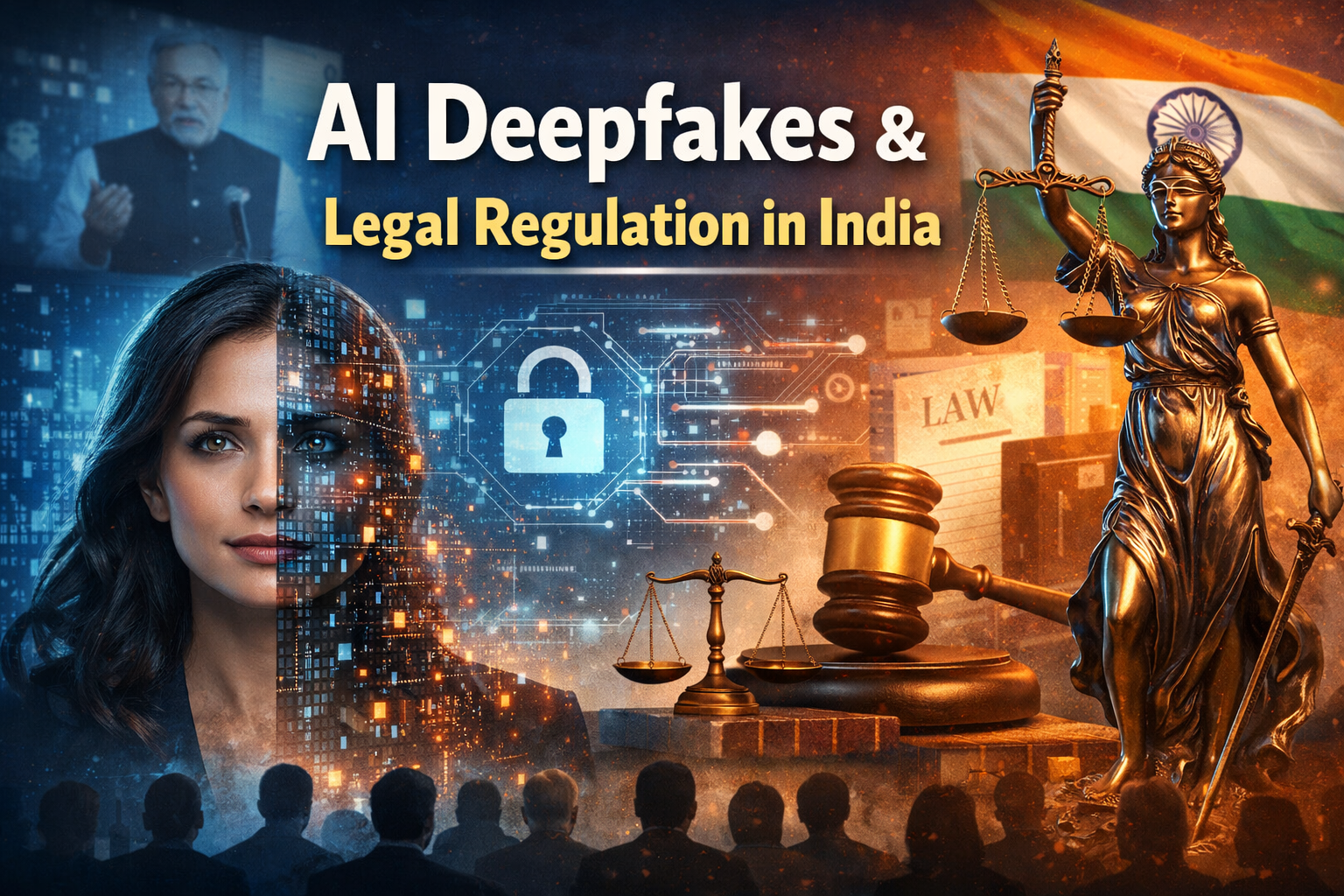
Artificial Intelligence has simplified our lives although it has given rise to new threats. The proliferation of AI-created images, video, or audio, which seem real and yet is an entirely false deepfake, is one of the most worrying trends.
Deepfakes are not a technological problem any longer; now, it is a serious legal and ethical problem in India.
Table of Contents
ToggleWhat are Deepfakes?
Artificial intelligence is employed by Deepfakes to tamper with or generate content in which an individual allegedly says or does something that he or she never did. Since it can be celebrities face swapping or even fabricated political speeches, the possibility of abuse is enormous.
Why is it Dangerous?
Deepfakes may affect individuals and the society in a number of ways:
- Reputation and privacy loss.
- Misinformation dissemination and fake news.
- Internet fraud and identity theft.
- This is because threats to democratic processes are detected.
Legal Position in India
India is yet to enact a specific law to take deepfake seriously.
Yet, the existing legislation may be utilized:
Information Technology Act, 2000
Scores cyber crimes such as identity theft, cheating and privacy invasion.
Indian Penal Code (IPC)
Relations with defamation, cheating, forgery may be availed.
Data Protection Laws (New Framework)
Eliminate personal information abuse.
Challenges in Regulation
- Challenges in identifying deepfakes.
- Poor recognition by the citizens.
- Delay in legal accommodating technology.
- Digital crimes are cross-border in nature.
The Way Forward
India should have a specific legal framework to combat the harms that are related to deepfaking. There are also stricter laws, awareness, digital literacy, and technological solutions, which are also significant.
Conclusion
Deepfakes demonstrate the extent of the power of AI and the dangers of unregulated AI. The law should keep up with the pace so that it can be highly innovative but at the same time keep the standards accountable so that technology can serve the people instead of working against them.
– Team Lawyer Talks