By Lawyer Talks | lawyertalks.co.in
Legal studies can be quite intimidating, with hundreds of concepts, limitless case laws, and jargon. But what would you say to make it all one mighty way?
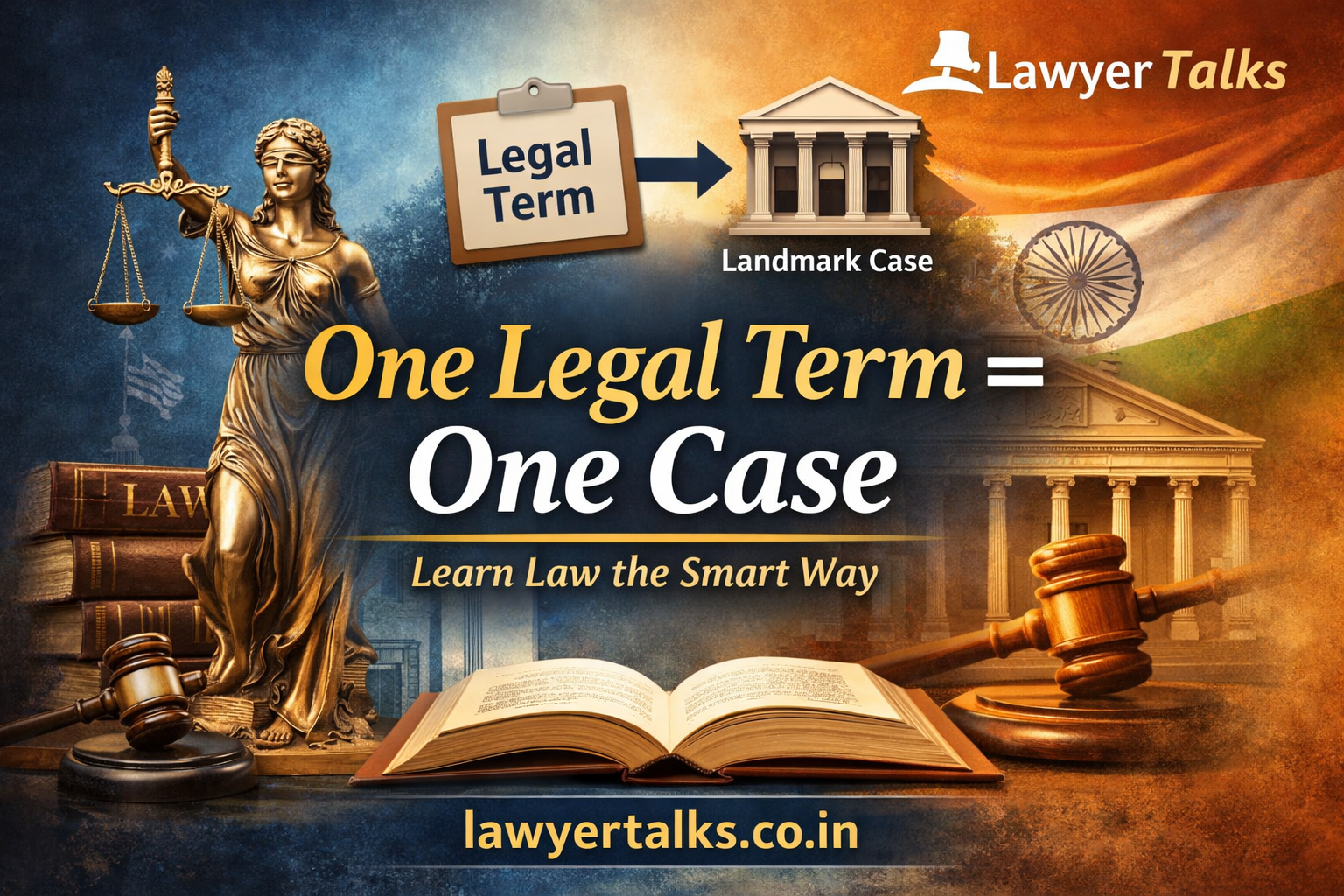
Welcome to our new series: One Legal Term = One Case.
The series targets law students, judiciary aspirants, AIBE candidates, and legal beginners in particular with the aim of learning law in a practical, memorable and exam-oriented manner.
Table of Contents
ToggleWhat does it mean by One Legal Term = One Case?
The idea is simple:
👉 You learn ONE important legal term
👉 You relate it to a single landmark case.
👉 You can see how it is used in real life.
You develop conceptual clarity + case law memory, rather than memorizing definitions.
⚖️ Why This Series Matters.
Honestly speaking, just reading bare acts is not enough.
- You forget words readily ❌
- Case laws are out of place ❌
- Exams require answers of application ❌
This approach addresses all the three issues:
- ✔️ Makes concepts easy to understand
- ✔️ Assists with recalling landmark judgments
- ✔️ Enhances writing of answers and MCQs
📚 Example 1: “Doctrine of Basic Structure”
Legal Term: Doctrine of Basic Structure.
Case: Kesavananda Bharati v. State of Kerala (1973)
According to this doctrine, Parliament cannot amend the Constitution in a way that destroys the structure of the Constitution.
With the help of this case, the Supreme Court safeguarded the main characteristics such as:
- Supremacy the Constitution.
- Rule of Law
- Judicial Review
💡Reasons why it is important: This case is the cornerstone of the Indian Constitutional Law and often exam questions.
📚 Example 2: “Res Judicata”
Legal Term: Res Judicata
Case: Daryao v. State of Uttar Pradesh (1961)
It refers to a case that has been adjudicated cannot be re-litigated between the same parties.
👈 The Supreme Court ruled that, once a case is finally settled, it cannot be reopened.
💡 Why it is relevant: Of the utmost importance to CPC, judiciary exams, and practice of litigation.
📚 Example 3: “Absolute Liability”
Legal Term: Absolute Liability
Case: M.C.Mehta v. Union of India (Oleum Gas Leak Case, 1987)
According to this principle a hazardous industry is absolutely liable, provided it has caused harm.
👉 The company has to pay, even in the case of no negligence.
💡Reasons it is important: A ground-breaking development out of strict liability, which is extremely significant in Environmental Law.
🚀 How this Series will Benefit YOU
You are making preparations to:
- Judiciary Exams 🏛️
- AIBE 📜
- APO / PCS-J ⚖️
- Law School Exams 📚
This series will:
✔️ Save your time
✔️ Strengthen conceptual clarity
✔️ Boost retention power
✔️ Improve legal writing
🧠 Pro Tip for Students
Do not read passively – revisely actively:
- Make short notes
- Link terms with facts of the case
- Do MCQs based on them
👉 One term + one case = long-term memory
📢 Lawyer Talks What’s Next?
In this series we shall be posting daily on:
- Constitutional Law
- Criminal Law
- Contract Law
- CPC & Evidence
- Important Legal Maxims
🔗 Stay Connected
📌 Follow Lawyer Talks for daily legal learning
🌐 Visit: lawyertalks.co.in
Law is not about memorizing; law is about understanding.
✨ Final Thought
The legal theory of one good idea identifying with one good case can alter the manner in which you think permanently.
– Team Lawyer Talks