
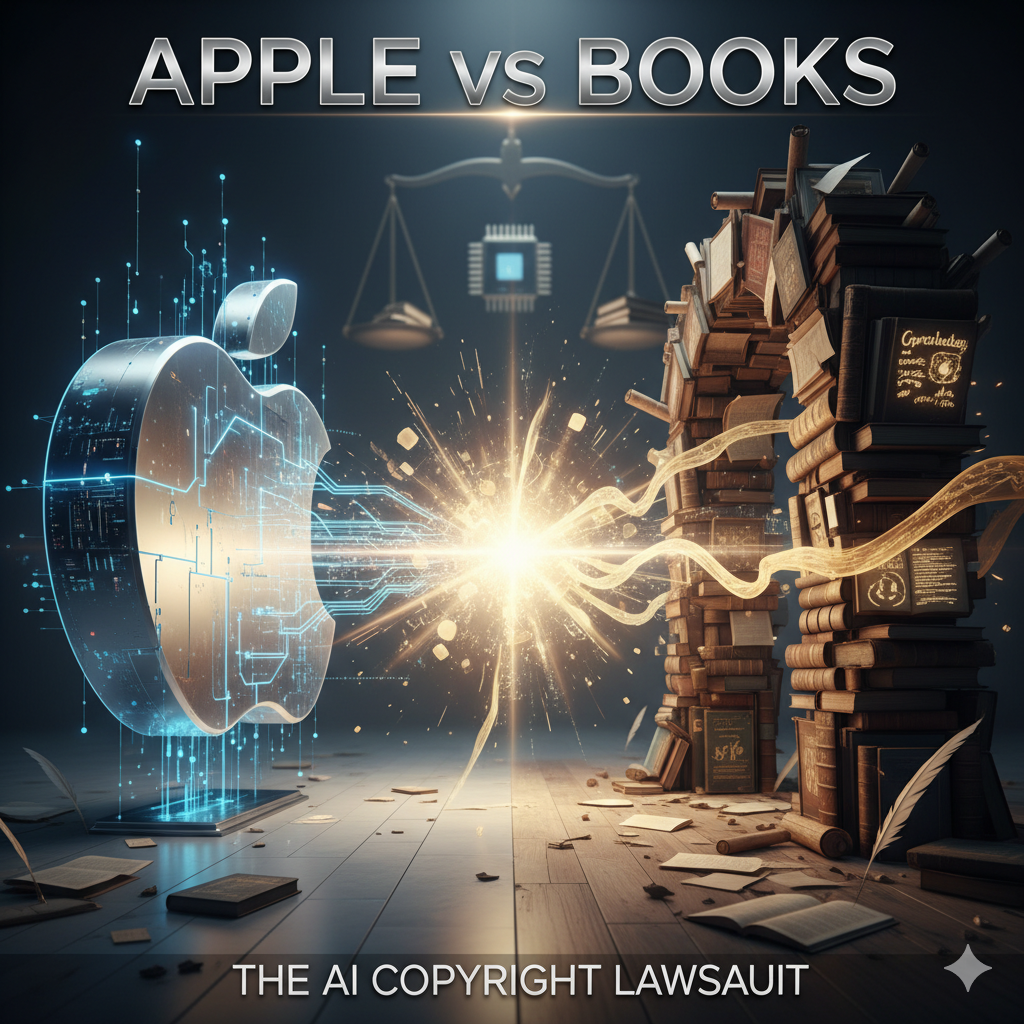
The race for AI dominance just got a significant legal speed bump, and this time, it’s Apple in the hot seat. Hot on the heels of its much-hyped “Apple Intelligence” announcement, the tech giant is reportedly facing a lawsuit alleging the unauthorized use of copyrighted books to train its burgeoning AI models. This development throws a substantial wrench into Apple’s AI ambitions and reignites the simmering debate around data sourcing and intellectual property in the age of artificial intelligence.
The Allegations: A Familiar Tune?
While details of the specific lawsuit are still emerging, the core accusation is one that’s becoming increasingly familiar in the AI landscape: that Apple’s AI models were trained on vast datasets containing copyrighted literary works without permission or proper compensation to the authors and publishers. This isn’t the first time an AI developer has faced such claims; companies like OpenAI, Meta, and Stability AI have all been targeted with similar lawsuits, highlighting a critical tension between the data-hungry nature of AI and existing copyright frameworks.
Why Books? The Value of Literary Data
It’s no secret that high-quality, diverse text data is crucial for training sophisticated large language models (LLMs). Books, with their rich vocabulary, complex narratives, diverse themes, and well-structured language, represent an incredibly valuable resource. They offer a depth of understanding and a breadth of knowledge that can significantly enhance an AI’s ability to generate coherent, creative, and contextually relevant text. For AI developers, the temptation to leverage such a vast and readily available corpus of human knowledge is immense.
Apple Intelligence: A New Frontier, Old Problems?
Apple Intelligence, unveiled with much fanfare as a suite of personal AI features deeply integrated into Apple’s ecosystem, promises to revolutionize how users interact with their devices. From smarter notifications and enhanced writing tools to personalized image generation and context-aware Siri, the vision is compelling. However, if these new capabilities are built upon a foundation of illegally obtained data, the legal and ethical ramifications could be significant.
The Broader Implications for AI Development
This lawsuit, regardless of its outcome, has far-reaching implications for the entire AI industry:
- Scrutiny on Data Sourcing: It will undoubtedly intensify scrutiny on how AI companies acquire and use training data. Transparency and ethical data practices will become even more paramount.
- Redefining Fair Use: The legal battles will continue to push courts to re-evaluate and potentially redefine “fair use” in the context of AI training. Is scraping publicly available data for AI training transformative enough to fall under fair use, or does it constitute derivative work requiring licensing?
- The Cost of AI: If AI developers are consistently required to license all training data, the cost of developing and deploying advanced AI models could skyrocket, potentially concentrating AI power in the hands of a few wealthy corporations.
- Author and Creator Rights: For authors, artists, and other creators, these lawsuits represent a crucial fight for their intellectual property rights in the digital age. The outcome could set precedents for how creative works are valued and protected in an AI-driven world.
What’s Next for Apple?
Apple now faces the challenge of defending its data acquisition practices while simultaneously trying to roll out its ambitious AI features. The company prides itself on its commitment to privacy and ethical practices, and these allegations could tarnish that image.
The legal process will likely be protracted, involving complex arguments around copyright law, technological innovation, and economic impact. In the meantime, the spotlight remains firmly on how the tech industry navigates the ethical minefield of AI development.
- Top 25 Bihar Judiciary Previous Year Questions (MCQs) – PRELIMS PRACTICE SET
- Case Comment: INTERNET FREEDOM FOUNDATION v. UNION OF INDIA AND ORS. (AADHAAR CASE)
- When Foreign Divorce Meets Indian Law: Supreme Court Resolves an 18-Year Marital Dispute
- One Nation, One Election – Reform or Risk for Indian Democracy?
- Breach of Contract and Legal Remedies