
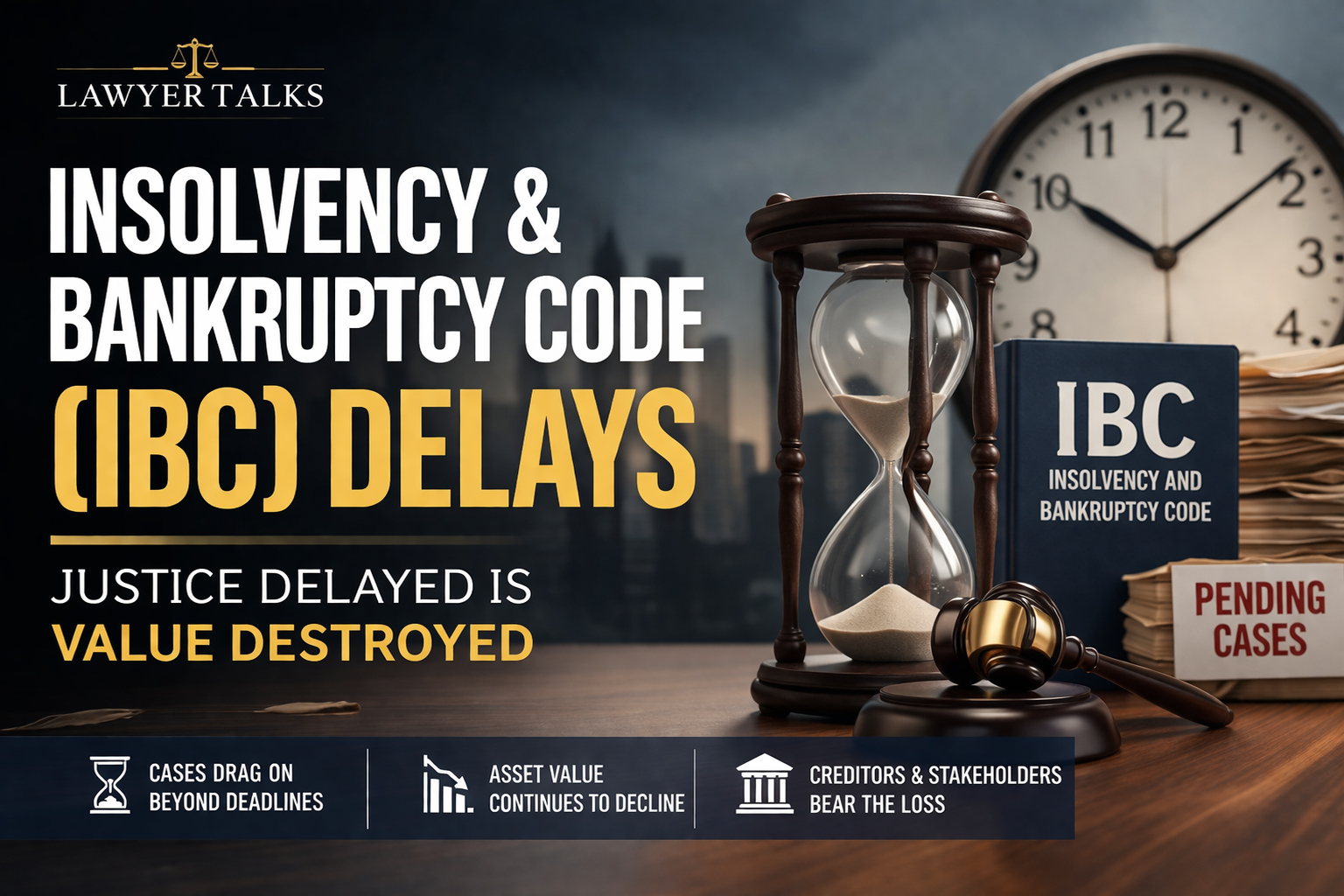
A significant move towards enhancing Indian insolvency was the introduction of the Insolvency and Bankruptcy Code (IBC) in 2016. It was supposed to secure a time-limited solution to stressed assets, which should be 180 days (with an extension to 330 days).
Nevertheless, the fact that the resolution process has become more and more delayed has been a matter of concern.
Table of Contents
ToggleWhat Are the Reasons why Delays Happen?
The slackness of IBC proceedings is caused by several factors:
- Overstrained NCLT: National Company Law Tribunal deals with a heavy workload of cases with few resources and benches.
- Regular Litigation: Parties are prone to appealing decisions to various levels up to NCLAT and Supreme Court.
- Complexity of Cases: Large insolvency cases are characterized by multiple stakeholders and legal issues.
- Absence of Buyers: Sometimes, particularly in small businesses, there will be no resolution applicants so that the process will take a long time.
Effects of These Delays
Delays frustrate the main goal of the IBC. As time passes:
- The assets become devalued.
- Creditors have lower recovery.
- Precariousness in employees and businesses.
- Trust in the system is undermined.
The Way Forward
In order to make IBC more effective, it is worth:
- Empower NCLT structures and capacity.
- Limit unnecessary litigation
- Encourage more expedient and expedited resolution plans.
- Encourage out-of-court settlements
Conclusion
There is no doubt that IBC has revolutionized the insolvency regime in India, yet delays still remain a problem to its success. These issues are important to deal with so that the law actually brings efficient and timely solution as it was initially meant to be.
– Team Lawyer Talks