
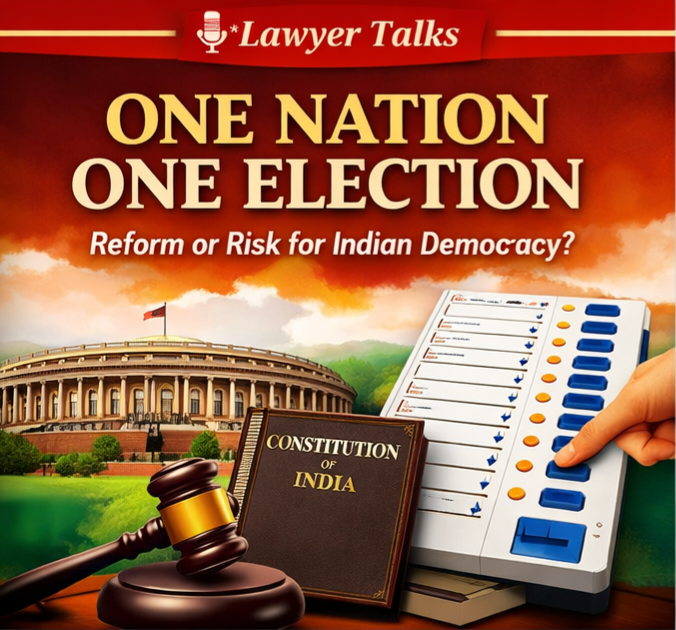
India’s democratic system is one of the largest in the world, but it also faces unique challenges; especially when it comes to conducting elections. One proposal that has recently gained attention is “One Nation, One Election” (ONOE). While it promises efficiency, it also raises serious constitutional and practical concerns.
Let’s understand this concept in a simple and practical way.
Table of Contents
Toggle📌 What is One Nation, One Election?
“One Nation, One Election” means conducting Lok Sabha and all State Assembly elections at the same time.
Currently, elections are held at different times across states, which results in the country being in a constant election cycle. The ONOE proposal aims to synchronize these elections so that voting happens simultaneously across India.
⚖️ Why is it Being Proposed?
Supporters of this idea highlight several advantages:
- Reduced Election Costs: Conducting elections together can significantly lower government expenditure.
- Better Governance: Leaders can focus more on policy-making instead of continuous campaigning.
- Administrative Efficiency: It reduces the burden on election officials, security forces, and government machinery.
At first glance, the idea appears efficient and beneficial.
⚠️ Legal and Constitutional Challenges
However, implementing ONOE is not easy and involves complex legal issues.
- Impact on Federal Structure: India follows a federal system where states have independent powers. Synchronizing elections may affect state autonomy.
- Constitutional Amendments Required: Changes would be needed in provisions related to the tenure of Lok Sabha and State Assemblies.
- Uncertainty in Case of Government Collapse: What happens if a government falls before completing its term?
- Should fresh elections be held?
- Or should President’s Rule be imposed until the next cycle?
These questions make the proposal legally complicated.
🧠 Key Concerns and Criticism
Critics of ONOE raise important points:
- Dominance of National Issues: National-level campaigns may overshadow local and regional issues.
- Disadvantage to Regional Parties: Smaller parties may struggle to compete with national parties.
- Risk to Democratic Representation: India’s diversity requires different voices at different times, which may be diluted.
These concerns highlight the need to balance efficiency with democratic values.
📊 Why This Debate Matters
This issue is not just about elections—it directly affects the core structure of Indian democracy.
It involves key constitutional principles such as:
- Federalism
- Representation
- Balance of power between Centre and States
Any decision in this regard will have long-term consequences for governance in India.
🏁 Conclusion
“One Nation, One Election” is a powerful idea, but it is not without challenges.
While it promises cost reduction and administrative efficiency, it also raises serious concerns about constitutional balance and democratic fairness.
In a country as diverse as India, the real challenge is to ensure that efficiency does not come at the cost of representation.
💬 Final Thought
👉 “Democracy is not just about voting together, but about ensuring every voice is heard equally.”
– Team Lawyer Talks