

The 2024 Supreme Court verdict in State of Punjab v. Davinder Singh marks a transformative moment in India’s constitutional journey. It addresses a sensitive yet vital question: Can the State sub-classify Scheduled Castes (SCs) to ensure reservation benefits reach the most marginalized?
Moving beyond political rhetoric, this judgment anchors itself in the core pillars of the Constitution that is equality, social justice, and substantive fairness.
The Core Constitutional Question
The controversy began when the State of Punjab attempted to provide preferential reservation within the SC category for communities deemed more socially and educationally backward than others.
The legal crux was simple yet profound:
- Do Scheduled Castes constitute a homogeneous (indivisible) class under Articles 15(4) and 16(4)?
- Or can the State introduce sub-classification to achieve “deeper” equality?
While previous judicial precedents (notably E.V. Chinnaiah) treated SCs as a unified block, this 7-judge bench reopened the conversation to align the law with modern social realities.
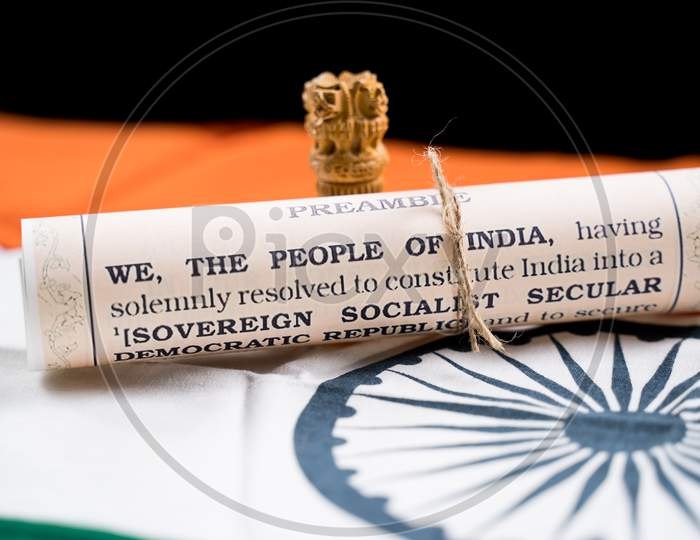
The Court’s Reasoning: From Formal to Substantive Equality
The Supreme Court examined the matter through the lens of Article 14 (Equality before Law) and Articles 15(4) & 16(4) (Protective Discrimination). The Bench emphasized that equality does not always mean identical treatment.
”Formal equality may sometimes defeat real equality.”
- Intelligible Differentia: Sub-classification is valid if based on clear, identifiable data.
- Rational Nexus: The classification must directly relate to the goal of equitable distribution.
- Social Justice: The move must advance the broader constitutional goal of uplifting the most oppressed.
Why This Matters: Breaking the Monopoly of Benefits
One of the most compelling aspects of this ruling is the acknowledgment of ground realities. If reservation benefits are disproportionately consumed by relatively advanced sub-groups, the purpose of affirmative action is frustrated.
By allowing sub-classification, the Court has:
- Encouraged evidence-based policy formulation.
- Prevented the monopolization of benefits by “creamy” layers within reserved categories.
- Strengthened Cooperative Federalism, allowing States to tailor policies to their unique demographic needs.
The Impact on Reservation Jurisprudence
This ruling does not dilute the reservation system; it refines it. However, the Court added a layer of protection: Judicial Review. Any sub-classification must be backed by empirical data to ensure it isn’t used as a tool for political populism.
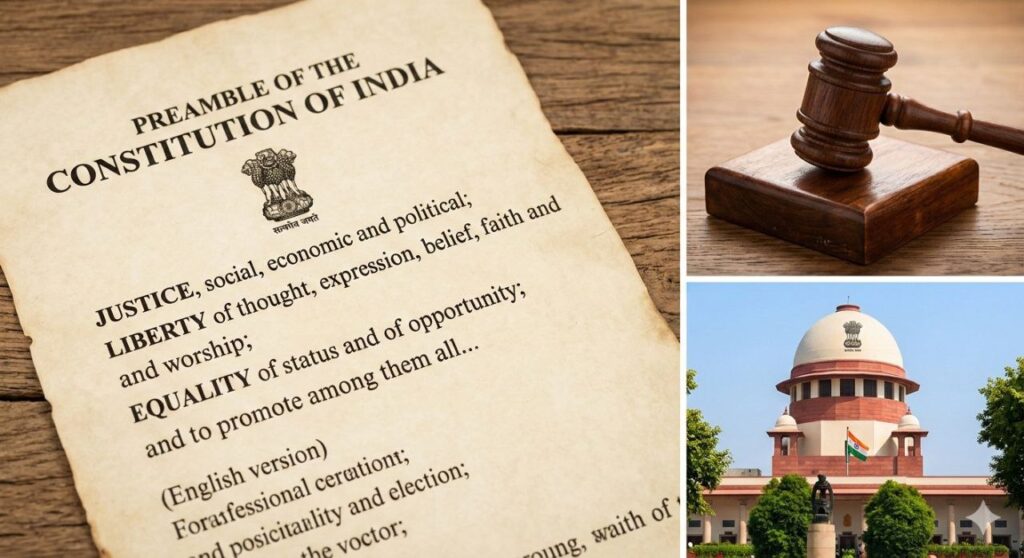
Essential for Judiciary Aspirants ⚖️
If you are preparing for Judicial Services or the UPSC, this case is a “must-know” for your Constitutional Law papers. It illustrates:
- The evolution of the Doctrine of Reasonable Classification.
- The shift from Mechanical Uniformity to Substantive Equality.
- The interpretation of Article 341 regarding the President’s power to notify SC lists.
Final Reflections
The State of Punjab v. Davinder Singh judgment reminds us that social justice is not static. In the pursuit of true fairness, uniformity is not always the answer. Sometimes, justice requires a nuanced eye to see the inequalities within an equal group.
This is not just a legal change; it is a step toward making the promise of the Preamble a reality for the “last person in the line.
– Team Lawyer Talks