
In a significant development for women lawyers in India, the Supreme Court has taken cognizance of the persistent underrepresentation of women in legal governance bodies.
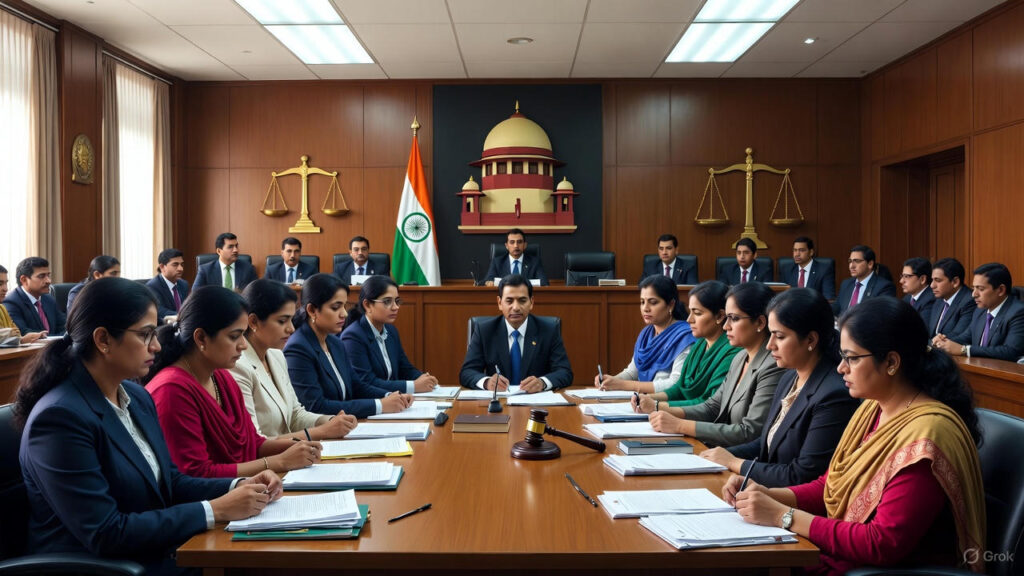
On December 18, 2024, a bench comprising Justices Surya Kant and Ujjal Bhuyan issued notice on a public interest litigation (PIL) seeking one-third (33%) reservation for women in bar associations across Gujarat, with broader implications for state bar councils nationwide.
The plea, filed by Gujarat High Court advocate Meena A. Jagtap, highlights how women lawyers remain sidelined in decision-making despite comprising a growing portion of the profession. This move aligns with the Supreme Court’s ongoing efforts to promote gender parity in the judiciary and bar bodies.
Why This Plea Matters: The Fight for 33% Women Reservation in State Bar Councils
The petition argues that without mandated reservation, women lawyers face systemic barriers in electing representatives to state bar councils and associations. Key demands include:
- 33% quota in all bar associations in Gujarat, including High Court and district levels.
- Extension of similar reservations to the Bar Council of Gujarat and potentially all state bar councils.
- Amendment to bylaws under the Advocates Act, 1961, to ensure proportional representation.
Advocate Jagtap emphasized that her earlier approaches to the Gujarat High Court yielded no results, as women’s membership in bar bodies remains abysmally low.
The Supreme Court has listed the matter for further hearing in the third or fourth week of January 2025, signaling serious intent to address this nationwide issue.
Current Reality: Dismal Women Representation in Bar Councils
- The Bar Council of India (BCI) has zero women members in its 20-member body.
- Major states like Maharashtra, Uttar Pradesh, Gujarat, and Rajasthan have no women in their state bar councils.
- Across India, women constitute only 2-3% of elected representatives in state bar councils, despite making up over 15-20% of enrolled advocates in many states.
This male-dominated structure affects policies on women-friendly infrastructure, sexual harassment redressal, and mentorship programs.
Supreme Court’s Recent Push for Women Quota in Bar Bodies
The apex court has been proactively dismantling gender barriers:
- May 2024: Mandated minimum 1/3rd reservation for women in Supreme Court Bar Association (SCBA) executive committee, including rotating office-bearer posts (starting with Treasurer for 2024-25).
- September 2024: Issued notice seeking proportional representation for women in all 21 state bar councils and BCI.
- 2025 Milestones:
- 30% reservation ordered in Karnataka district bar associations.
- 30% quota + Treasurer post reserved for women in Gujarat High Court and district bar associations (May 10, 2025).
- Extended to National Green Tribunal (NGT) Bar Association.
These “experimental” measures have already shown results – women now hold key posts in SCBA and several high court bar associations.
What Happens Next? Potential Nationwide 33% Quota for Women Lawyers
Legal experts predict this Gujarat plea could lead to a uniform policy across India. The Court has repeatedly invoked Articles 14, 15, and 39 of the Constitution for gender equality, drawing parallels with:
- 33% reservation in Panchayati Raj institutions.
- Women’s Reservation Act, 2023 (Nari Shakti Vandan Adhiniyam) for Lok Sabha and assemblies.
If granted, one-third reservation in state bar councils would:
- Empower over 5 lakh women lawyers (and growing).
- Ensure women-friendly policies like creches, anti-harassment cells, and flexible voting.
- Set a precedent for other professional bodies.
Keywords for Search:
- Supreme Court women reservation bar councils
- 33% quota women lawyers Gujarat
- One-third reservation state bar councils
- Women lawyers bar association elections 2025
- Gender equality Indian legal profession