
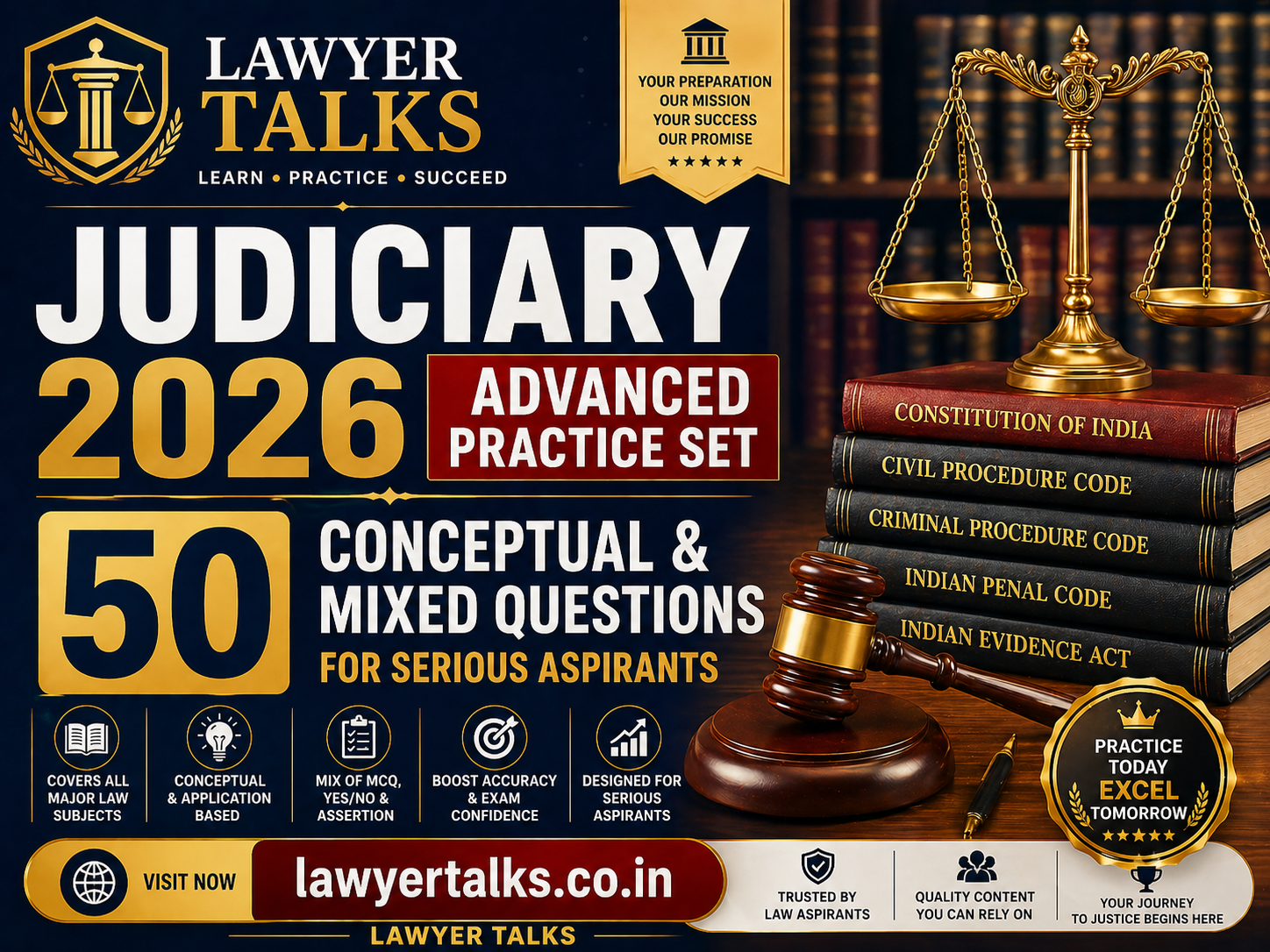
Sharpen your legal reasoning with carefully curated questions designed for Judiciary aspirants. Practice concept-based MCQs to strengthen accuracy and exam confidence.
1. Article 21 includes right to privacy after which judgment?
A. Maneka Gandhi
B. K.S. Puttaswamy
C. Kesavananda Bharati
D. Golaknath
Ans: B
2. (Yes/No) Directive Principles are enforceable in court.
Ans: No
3. Which writ is issued to quash illegal proceedings?
A. Mandamus
B. Certiorari
C. Habeas Corpus
D. Quo Warranto
Ans: B
4. (Assertion-Reason) Assertion: Judicial Review is part of Basic Structure
Reason: It ensures supremacy of Constitution
A. Both correct, reason explains
B. Both correct, no explanation
C. Assertion correct, reason wrong
D. Both wrong
Ans: A
5. Consideration must be:
A. Adequate
B. Lawful
C. Equal
D. Immediate
Ans: B
6. (Yes/No) Past consideration is valid in India.
Ans: Yes
7. Minor’s contract is:
A. Voidable
B. Void
C. Illegal
D. Valid
Ans: B
8. (Assertion-Reason) Assertion: Free consent is essentialReason: It ensures fairness in contract
A. Both correct, reason explains
B. Both correct, no explanation
C. Assertion correct, reason wrong
D. Both wrong
Ans: A
9. In tort, “ubi jus ibi remedium” means:
A. No remedy
B. Where there is right, there is remedy
C. Strict liability
D. None
Ans: B
10. (Yes/No) Negligence requires damage.
Ans: Yes
11. Absolute liability case:
A. Rylands v Fletcher
B. Oleum Gas Leak
C. Donoghue
D. None
Ans: B
12. (Assertion-Reason) Assertion: Strict liability has exceptionsReason: Absolute liability has no exceptions
A. Both correct, reason explains
B. Both correct, no explanation
C. Assertion correct, reason wrong
D. Both wrong
13. Murder defined under:
A. 299
B. 300
C. 302
D. 304
Ans: B
14. (Yes/No) Every culpable homicide is murder.
Ans: No
15. Common intention:
A. Sec 34
B. Sec 149
C. Sec 120
D. Sec 107
Ans: A
16. (Assertion-Reason) Assertion: Mens rea is essential in crimeReason: Crime requires guilty mind
A. Both correct, reason explains
B. Both correct, no explanation
C. Assertion correct, reason wrong
D. Both wrong
A. Both correct, reason explains
B. Both correct, no explanation
C. Assertion correct, reason wrong
D. Both wrong
A. Both correct, reason explains
B. Both correct, no explanation
C. Assertion correct, reason wrong
D. Both wrong
A. Both correct, reason explains
B. Both correct, no explanation
C. Assertion correct, reason wrong
D. Both wrong
A. Both correct, reason explains
B. Both correct, no explanation
C. Assertion correct, reason wrong
D. Both wrong
A. Both correct, reason explains
B. Both correct, no explanation
C. Assertion correct, reason wrong
D. Both wrong
A. Both correct, reason explains
B. Both correct, no explanation
C. Assertion correct, reason wrong
D. Both wrong
A. Both correct, reason explains
B. Both correct, no explanation
C. Assertion correct, reason wrong
D. Both wrong
A. Both correct, reason explains
B. Both correct, no explanation
C. Assertion correct, reason wrong
D. Both wrong
– Team Lawyer Talks