
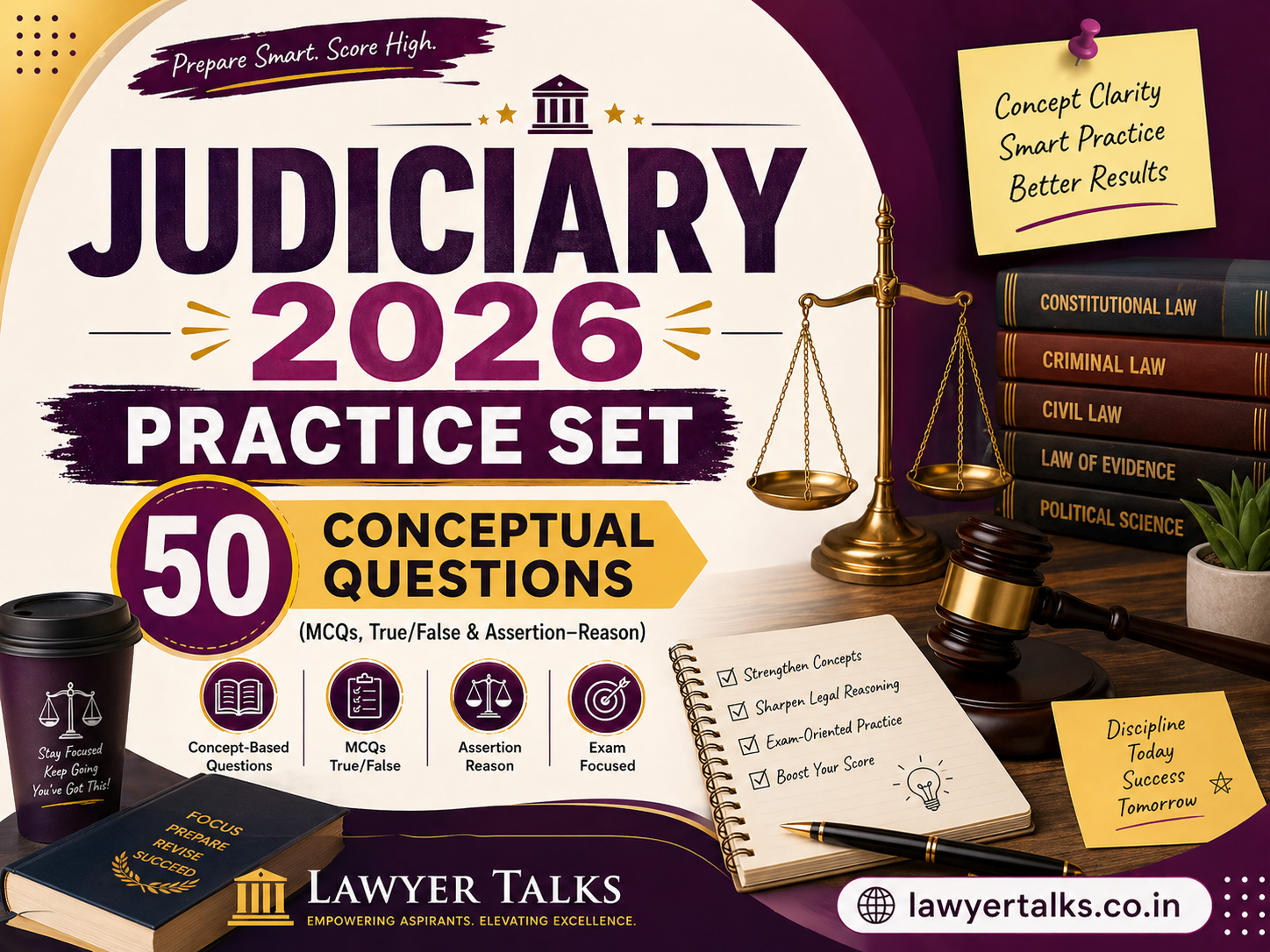
A structured set of 50 exam-oriented questions designed for Judiciary aspirants, covering core subjects with a mix of MCQs, True/False, and Assertion–Reason to strengthen conceptual clarity and legal reasoning.
1. Article 14 permits reasonable classification but prohibits class legislation.
A. True
B. False
Ans: A
2. Which of the following is NOT a ground of reasonable classification?
A. Intelligible differentia
B. Nexus with object
C. Arbitrary distinction
D. Rational relation
Ans: C
3. Assertion (A): Article 21 includes right to livelihood.
Reason (R): It has been judicially expanded.
A. Both correct, R explains A
B. Both correct, R not explanation
C. A correct, R wrong
D. A wrong, R correct
Ans: A
4. Preventive detention laws are subject to judicial review.
A. True
B. False
Ans: A
5. Which writ is issued to prevent excess of jurisdiction?
A. Habeas Corpus
B. Mandamus
C. Prohibition
D. Certiorari
Ans: C
6. Preparation is generally not punishable except in specific offences.
A. True
B. False
Ans: A
7. Which element distinguishes murder from culpable homicide?
A. Knowledge
B. Intention of highest degree
C. Actus reus
D. Motive
Ans: B
8. Assertion (A): Motive is irrelevant in criminal law.
Reason (R): Intention is more important than motive.
A. Both correct, R explains A
B. Both correct, R not explanation
C. A wrong, R correct
D. A correct, R wrong
Ans: A
9. Common intention under IPC requires prior meeting of minds.
A. True
B. False
Ans: A
10. Criminal conspiracy is complete upon:
A. Agreement
B. Attempt
C. Commission
D. Preparation
Ans: A
11. Cognizance is taken by the Magistrate, not by police.
A. True
B. False
Ans: A
12. Police can arrest without warrant in non-cognizable offences.
A. True
B. False
Ans: B
13. Assertion (A): Default bail is a statutory right.
Reason (R): It arises due to delay in investigation.
A. Both correct, R explains A
B. Both correct, R not explanation
C. A correct, R wrong
D. A wrong, R correct
Ans: A
14. Sessions Court can take cognizance without committal.
A. True
B. False
Ans: B
15. FIR can be lodged by any person having knowledge of offence.
A. True
B. False
Ans: A
16. Confession to a police officer is inadmissible.
A. True
B. False
Ans: A
17. Which is NOT a kind of evidence?
A. Oral
B. Documentary
C. Hearsay
D. Real
Ans: C
18. Assertion (A): Admission is relevant.
Reason (R): It is a statement against interest.
A. Both correct, R explains A
B. Both correct, R not explanation
C. A correct, R wrong
D. A wrong, R correct
Ans: A
19. Leading questions are allowed in cross-examination.
A. True
B. False
Ans: A
20. Burden of proof initially lies on prosecution/plaintiff.
A. True
B. False
Ans: A
21. Res judicata bars re-litigation of same issue.
A. True
B. False
Ans: A
22. Which provision deals with rejection of plaint?
A. Order 7 Rule 11
B. Order 9 Rule 13
C. Section 151
D. Section 96
Ans: A
23. Assertion (A): Review lies before same court.
Reason (R): Appeal lies before higher court.
A. Both correct, R explains A
B. Both correct, R not explanation
C. A correct, R wrong
D. A wrong, R correct
Ans: B
24. Temporary injunction is an interim relief.
A. True
B. False
Ans: A
25. Ex parte decree can be set aside.
A. True
B. False
Ans: A
26. Agreement without consideration is void.
A. True
B. False
Ans: A
27. Minor’s agreement is void ab initio.
A. True
B. False
Ans: A
28. Assertion (A): Free consent excludes coercion.
Reason (R): Consent must be voluntary.
A. Both correct, R explains A
B. Both correct, R not explanation
C. A correct, R wrong
D. A wrong, R correct
Ans: A
29. Negligence requires duty, breach, and damage.
A. True
B. False
Ans: A
30. Defamation requires publication.
A. True
B. False
Ans: A
31. Judicial review is part of basic structure.
A. True
B. False
Ans: A
32. Doctrine of severability removes unconstitutional part.
A. True
B. False
Ans: A
33. Assertion (A): Natural justice ensures fairness.
Reason (R): It includes hearing both sides.
A. Both correct, R explains A
B. Both correct, R not explanation
C. A correct, R wrong
D. A wrong, R correct
Ans: A
34. Bias rule prohibits judge from deciding own case.
A. True
B. False
Ans: A
35. Audi alteram partem means hear the other side.
A. True
B. False
Ans: A
36. Double jeopardy prohibits second prosecution for same offence.
A. True
B. False
Ans: A
37. Attempt begins when preparation ends.
A. True
B. False
Ans: A
38. Assertion (A): Motive is irrelevant for conviction.
Reason (R): Intention is decisive.
A. Both correct, R explains A
B. Both correct, R not explanation
C. A correct, R wrong
D. A wrong, R correct
Ans: A
39. Evidence Act applies to court proceedings only.
A. True
B. False
Ans: A
40. Limitation law bars remedy, not right.
A. True
B. False
Ans: A
41. Delay in FIR is always fatal.
A. True
B. False
Ans: B
42. Bail in bailable offence is a right.
A. True
B. False
Ans: A
43. Ratio decidendi is binding.
A. True
B. False
Ans: A
44. Obiter dicta is binding precedent.
A. True
B. False
Ans: B
45. Stare decisis promotes certainty in law.
A. True
B. False
Ans: A
46. Burden may shift under certain provisions.
A. True
B. False
Ans: A
47. Injunction is a civil remedy.
A. True
B. False
Ans: A
48. Cause of action gives right to sue.
A. True
B. False
Ans: A
49. Advocate’s primary duty is towards client.
A. True
B. False
Ans: B
50. Consistent revision improves retention in law exams.
A. True
B. False
Ans: A
– Team Lawyer Talks